
A Primer on ROKU

We have fond memories of Roku (ROKU) as we were very early with the stock that subsequently produced a tremendous rally in the last decade, becoming a multibagger for us and the reason we subtitled our Seeking Alpha Investment Group with “looking for the next Roku.”
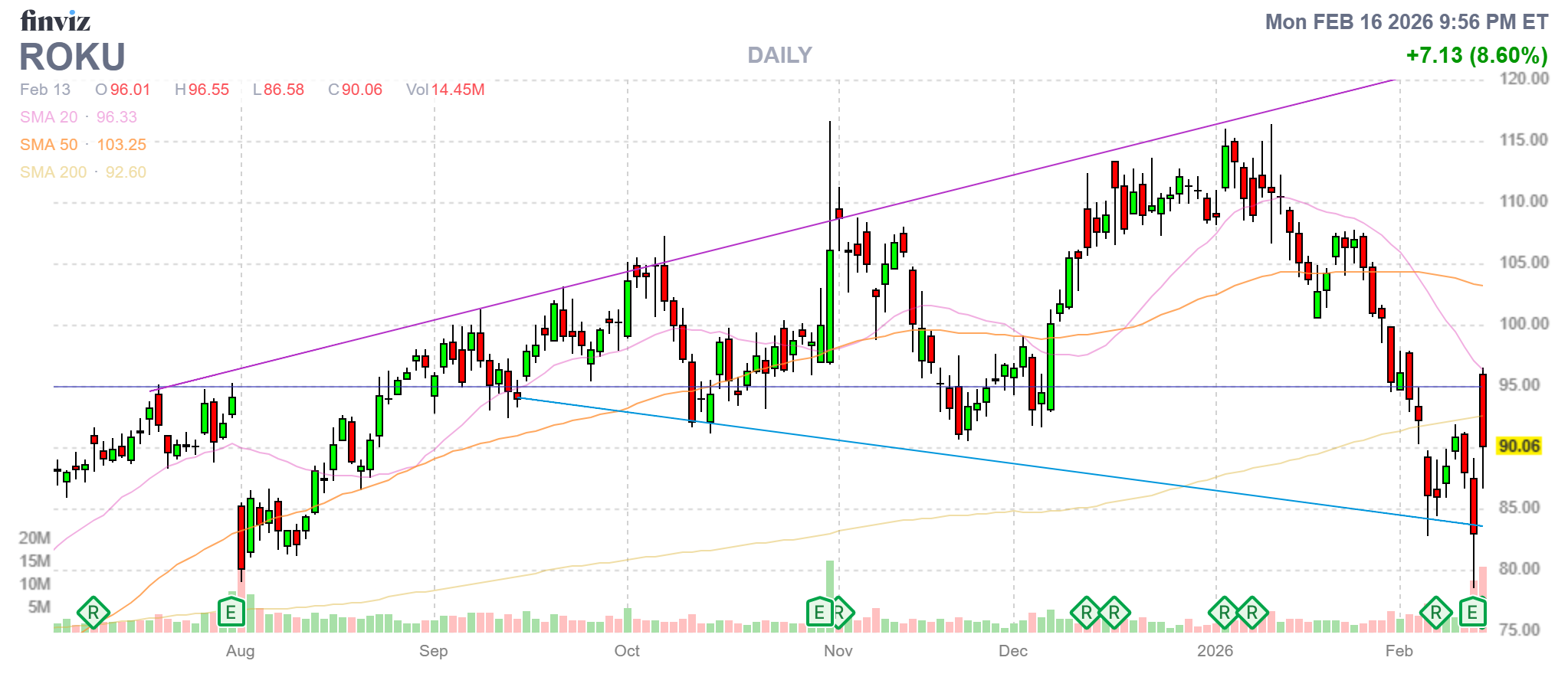
The shares have fallen back quite a bit, but now seem to be perking up as the company looks like cracking the profitability code on a more permanent basis. Primers are introductions, written to familiarize investors with the moving parts of a company.
They are usually followed by a more financially geared analysis. So here is our Primer on Roku.
Overview
Market Leadership: Roku is the leading TV streaming platform in the United States, Canada, and Mexico based on hours streamed.
Strategic Foundation: The foundation of the platform is the Roku TV OS, which is purpose-built for televisions and designed to run on low-cost hardware to keep consumer prices competitive.
Three-Phase Business Model: Roku’s growth is driven by a cycle of increasing scale, engagement, and monetization.
Devices
Role in Strategy: The Devices segment focuses on growing scale by making TV streaming accessible through various hardware at competitive prices.
Roku-Made TVs: Launched in 2023, this line includes the Select and Plus Series, and the high-performance Pro Series launched in spring 2024. These TVs allow Roku to innovate faster and compete in the higher-end market.
Licensing Program: Roku continues its 10-year-old licensing program where original equipment manufacturers (OEMs) use Roku’s smart TV reference designs and OS.
Streaming Players: In 2025, Roku introduced new Roku Streaming Stick and Roku Streaming Stick Plus models with enhanced performance and speed.
Smart Home and Audio: The ecosystem includes wireless soundbars, speakers, and subwoofers. It also features smart home devices like cameras, video doorbells, and a home monitoring system, some of which require subscription plans.
Smart Projectors: In 2025, the company launched Roku TV smart projectors for indoor and outdoor use.
Platform
The Roku Experience: This encompasses all features designed to help viewers find entertainment, starting with the Home Screen.
AI-Powered Personalization: A content row launched in 2024 uses AI to provide recommendations across different streaming apps, increasing streaming hours and ad reach.
Sports Experience: A dedicated destination that aggregates and organizes sports programming from across the platform in one location.
Revenue Generation: Platform revenue is derived from digital advertising (direct and programmatic), streaming service distribution (revenue shares), and branded buttons on remote controls.
Data Utilization: Roku uses first-party data and direct customer relationships to deliver targeted content recommendations and actionable insights to partners.
Owned and Operated (O&O) Streaming Services
The Roku Channel: A major driver of engagement that offers AVOD (80,000+ free movies/shows), Live TV (500+ FAST channels), and Premium Subscriptions (unified billing for third-party services like HBO Max). In December 2025, The Roku Channel hit an all-time high, representing 6.3% of all US TV streaming, up from 4.6% a year earlier.
Frndly TV: Acquired in May 2025, this subscription service offers 50+ live channels and cloud-based DVR at an affordable price.
Howdy: Launched in August 2025, this ad-free SVOD service is priced at $2.99 per month, offering nearly 10K hours of content.
Strategic Value: Owning these apps allows Roku to control advertising inventory, lead in free content, and drive cost-efficient subscription sign-ups.
Howdy
A $2.99/M ad free service, launched in August 2025 with some 10K hours of light entertainment licensed from Lionsgate, Warner Bros. Discovery, and FilmRise.
Notable shows and movies include Weeds, The Drew Carey Show, Mad Max: Fury Road, The Blind Side, Kids in the Hall, and Dirty Dancing.
It also includes a curated selection of Roku’s own original programming, such as The Great American Baking Show.
The app is now mandated on all Roku devices upon setup, ensuring 100% visibility across its 80M+ active households.
While it launched exclusively on Roku hardware, CEO Anthony Wood announced at CES 2026 that Roku plans to take Howdy “off-platform,” potentially launching it as a standalone app on iOS, Android, and even competitor devices like Fire TV to maximize reach.
Bundling: Roku is currently testing Streaming Bundles that combine Howdy with other premium partners (like HBO Max or Frndly TV) to offer a single, discounted monthly bill managed through the Roku interface. There are also bundles with the likes of DoorDash, and other possible bundling is considered.
Roku is also deepening relationships with former rivals. For instance, Roku is now integrating Amazon’s DSP to sell its ad inventory, and the companies are discussing cross-platform bundles where a Roku user might get a discount on Prime Video if they subscribe via the Roku home screen.
Management also highlighted HBO Max as a key partner in its 2026 bundling roadmap, one area of cooperation is the possible arrival of Genre Bundles, which could be rolling out by mid-2026.
Roku is leveraging its data to offer instant rebates—if you buy certain products at retail partners, you get Roku Credit that can be applied to your Howdy or Max subscription.
There are four economic advantages of Howdy:
It converts free Roku Channel viewers into paying subscribers, increasing the ARPU.
Churn Reduction: By offering a very cheap, ad-free option, Roku keeps users within its ecosystem even if they cancel more expensive services like Max or Hulu.
Cushion volatile ad revenue: Historically, Roku’s stock price swung wildly based on the health of the digital ad market. If Ford or P&G cut their ad budgets, Roku’s stock would tank.
Valuation Multiple: Subscription revenue is typically valued at a higher multiple (6-8x revenue) than ad revenue (3-4x revenue) because it is more predictable.
Advertising and Monetization Innovation
Ad Formats: Beyond standard video ads, Roku offers Native Ads (Roku City screensaver, Home Screen spotlights), Destinations (sponsored playlists), and Action Ads (allowing viewers to buy items or subscribe via remote).
Roku City Enhancements: In 2025, the animated screensaver was updated to include interactive programming and original storytelling.
Third-Party Integrations: Partnerships with Walmart, Shopify, and Instacart enable “closed-loop” measurement and enhanced targeting for action ads.
SMB Accessibility: The Roku Ads Manager enables small and medium-sized businesses to repurpose social media content for TV streaming.
Measurement Tools: Roku provides a measurement framework based on verified identity, offering reach measurement, brand resonance, and sales attribution.
Competition
The streaming market has become a three-way battle for OS dominance. While Roku remains the market leader in North America, Amazon and Google are leveraging their vast ecosystems to challenge Roku’s neutrality.
Roku positions itself as the Neutral Switzerland of streaming. Because it doesn’t have a competing phone (like Google) or a massive retail-first streaming service (like Amazon Prime), it provides a cleaner, less biased interface. Roku’s ability to offer a great experience for Netflix, Disney+, and YouTube users alike—without favoring one has earned it a 55% preference rating among US cord-cutters in 2026.
Amazon Fire TV heavily pushes the Amazon ecosystem. Growth is fueled by deep integration with Alexa and Prime Video. It appeals to power users who want features like built-in web browsers (Silk) and smart home dashboard controls.
Google TV focuses on AI-driven discovery. It leverages Google’s search algorithms to create a unified watchlist that follows you from your phone to your TV. It is the fastest-growing OS globally due to its partnership with international TV manufacturers (TCL, Sony, Hisense).
The way these companies make money from you has diverged significantly by 2026:
Roku’s Open Growth: Roku’s biggest growth move in 2025–2026 was opening its inventory to third-party ad buyers like The Trade Desk and Amazon DSP. This means Roku now sells its ad space to the highest bidder globally, rather than relying only on its own sales team.
Amazon’s Closed Growth: Amazon focuses on Shoppable Ads. If you see a spatula on a cooking show, you can click your remote and buy it via your linked Amazon account. This lower-funnel data is something Roku is still trying to replicate through partnerships (with Shopify).
Google’s Search Growth: Google treats the TV like a giant search engine. Its growth comes from YouTube TV and YouTube Shorts integration, where it captures the massive shift of creator-led content moving from mobile screens to the living room.
International Expansion
Roku is winning in Mexico and Canada by offering the cheapest high-quality entry point.
Google TV is winning the rest of the world (Europe, Asia) because the Android-based TV OS is easier for local manufacturers to adopt.
Amazon is focusing on market-specific hardware, like the Fire TV Soundbar, to win over users who already own a dumb TV but want an audio upgrade.
Operational Performance and Growth
User Scale: The platform reached more than 90M Streaming Households globally.
Streaming Volume: Total Streaming Hours grew from 127.1B in 2024 to 145.6B in 2025.
Retail Concentration: Sales are highly concentrated, with Amazon, Best Buy, Walmart, and Target accounting for 81% of Devices revenue in 2025.
International Expansion: Devices are now available in over 15 countries. In 2025, player lineups expanded across Central and South America, while Roku TV models launched with new partners in Brazil, Colombia, Chile, Peru, and the UK.
Seasonality: Revenue and gross profit are typically strongest in the fourth quarter due to holiday advertising and device sales, though device gross margins often decline then due to heavy discounting.
Infrastructure and Human Capital
Manufacturing: Roku outsources all manufacturing to partners in China, Southeast Asia, Brazil, and Mexico.
Research and Development: Investments are focused on AI-powered capabilities, machine learning, and new hardware functionality.
Workforce: As of year-end 2025, Roku employed approximately 3,600 full-time employees in 15 countries.
Intellectual Property: The company holds approximately 1,800 issued patents and 650 pending applications globally.
Risk and Regulatory Environment
Competition: Roku faces intense competition from large companies offering streaming devices, smart TV operating systems, and alternative entertainment like social media and video games.
Data Privacy: The business is subject to rapidly evolving and increasingly restrictive privacy laws in the U.S. and abroad, which may limit advertising effectiveness.
Open Internet: The company relies on the continued openness and accessibility of the internet; new regulations impacting net neutrality could harm the business.
Global Trade: Risks include potential import restrictions, tariffs, and the complexities of varying international content quotas or production requirements.
Stay tuned for our financial update and assessment.