
A Primer On ServiceNow
A quick overview of the moving parts..

Overview
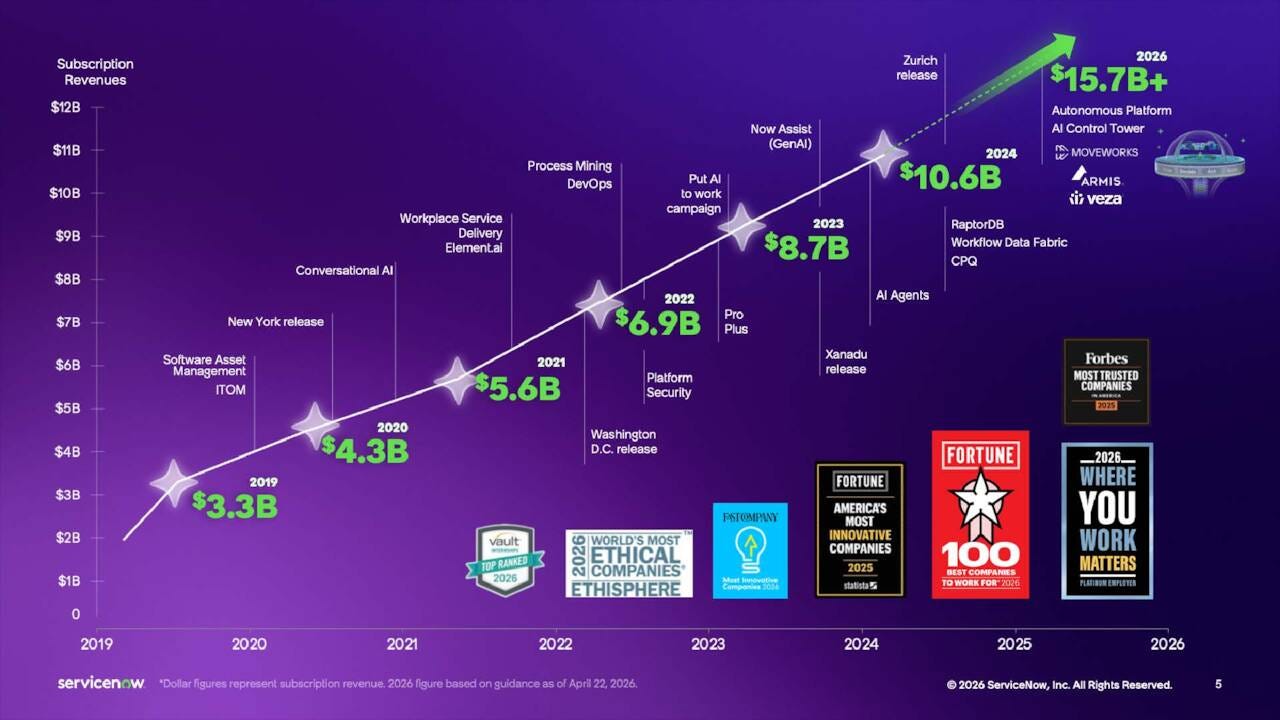
ServiceNow aims to be the “defining AI enterprise software company of the 21st century” by helping organizations govern, secure, and manage AI while streamlining workflows to drive productivity.
Management views the current shift toward artificial intelligence and machine learning as a major technological inflection point, similar to the transitions to cloud and mobile computing.
Management emphasizes that while AI is excellent at analyzing data and generating information, it cannot independently execute transactions or manage complex workflows. ServiceNow’s platform provides the infrastructure and orchestration needed to turn AI insights into governed business outcomes.
The company’s primary advantage lies in its two decades of experience understanding how work flows across siloed departments and systems, a foundation that allows for the integration of AI without replacing existing technology infrastructure.
The ServiceNow AI Platform Architecture
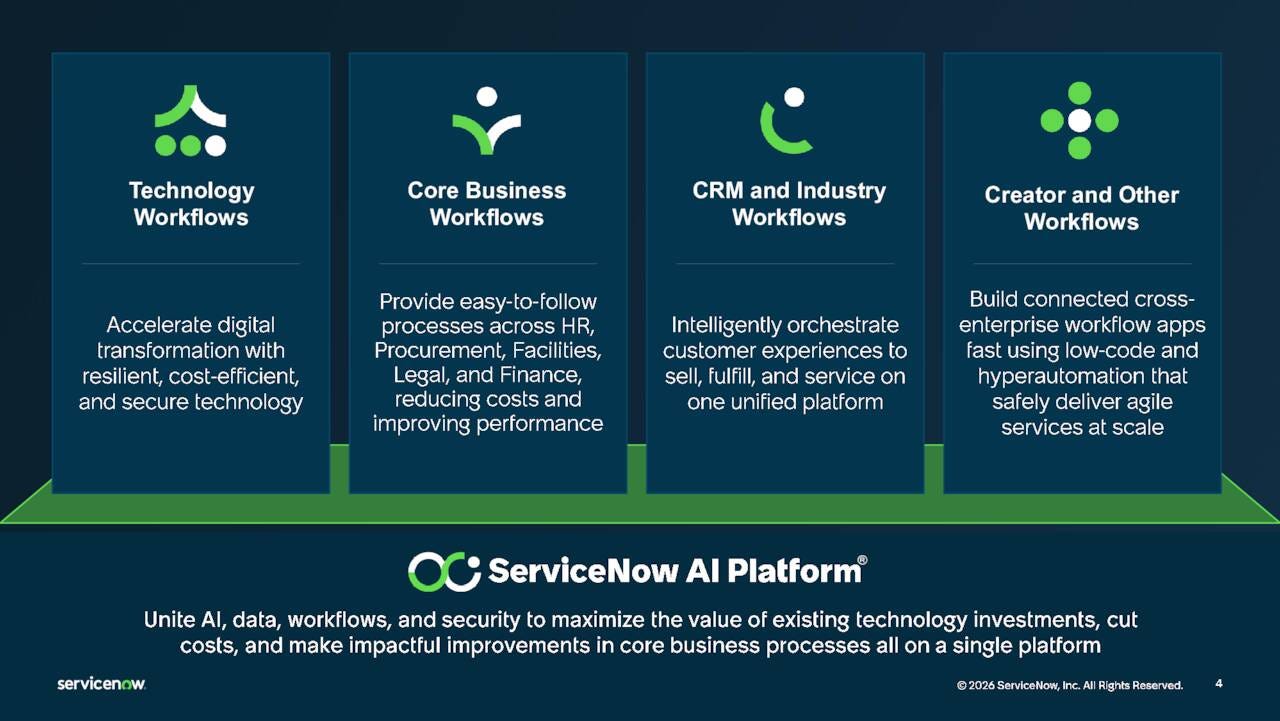
The platform is built on three foundational pillars: AI, Data, and Workflows.
AI (Now Assist & Agents)
Now Assist is the platform’s integrated AI offering, providing tools that operate autonomously with human oversight.
The platform supports ServiceNow’s own language models as well as third-party or proprietary models.
Organizations can deploy thousands of out-of-the-box AI agents, integrate third-party agents, or build custom agents using natural language.
Data (Workflow Data Fabric & RaptorDB)
RaptorDB is a high-performance database designed to handle massive workflow transactions with low latency.
The Workflow Data Fabric (WDF) allows organizations to access structured and unstructured data across the enterprise without moving or copying it from its source.
Workflows
The platform manages cross-functional workflows end-to-end, such as employee onboarding, where AI agents can autonomously trigger IT provisioning, payroll setup, and security access.
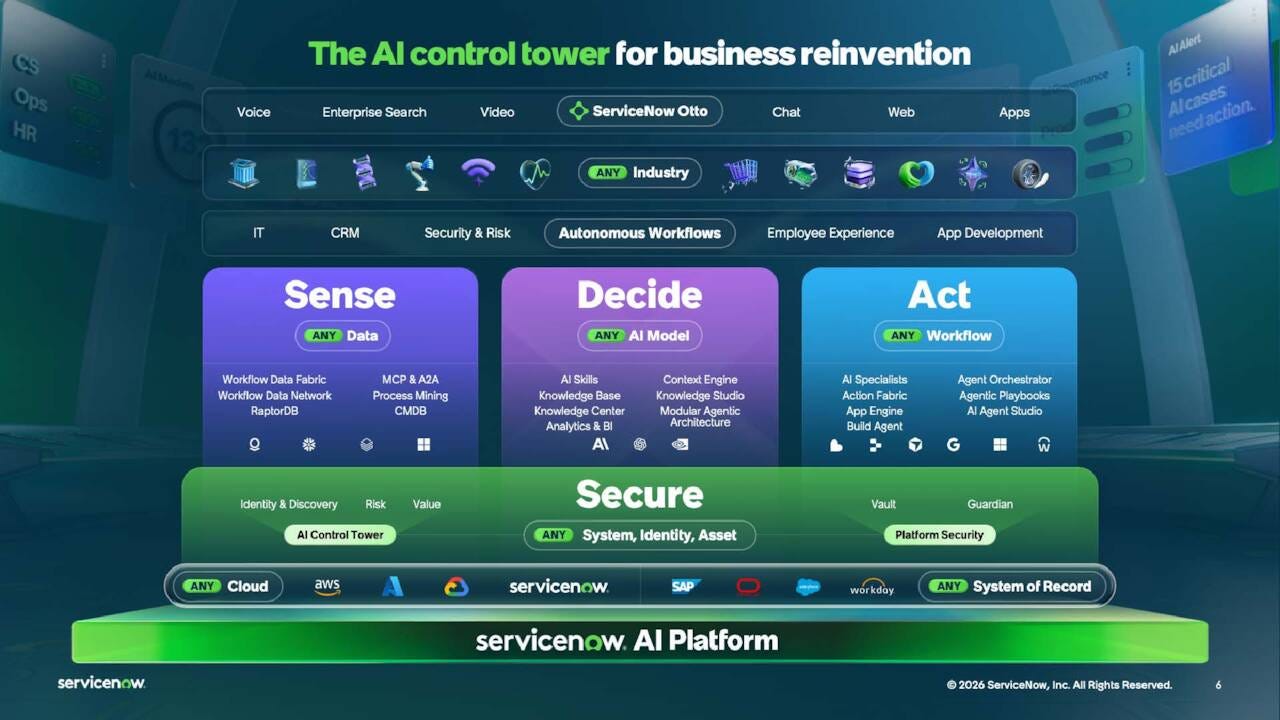
Core Product Areas
Technology Products
These help IT departments manage infrastructure, identify security vulnerabilities, and optimize costs.
IT Service Management (ITSM) provides predictive intelligence and routine task automation to reduce downtime.
Risk Management (RM) includes the AI Control Tower, a dashboard for monitoring an organization’s AI governance status and compliance metrics.
CRM and Industry Products
These go beyond traditional CRM by connecting front-office service functions with middle and back-office operations.
Customer Service Management (CSM) uses AI to summarize cases, suggest resolution steps, and personalize service delivery.
Industry-Specific Solutions that are tailored workflows for sectors including financial services, healthcare, manufacturing, and the public sector.
Core Business Products
These support internal enterprise functions like HR, legal, and finance.
HR Service Delivery (HRSD) automates routine requests like leave management and career development.
Legal and Contract Operations (LCO) uses AI to detect non-standard contract language and recommend approved clauses.
Creator Products
These include the App Engine, a low-code/no-code development tool that allows users to build enterprise-class workflows using natural language capabilities like text-to-code and text-to-flow.
Ecosystem and operations
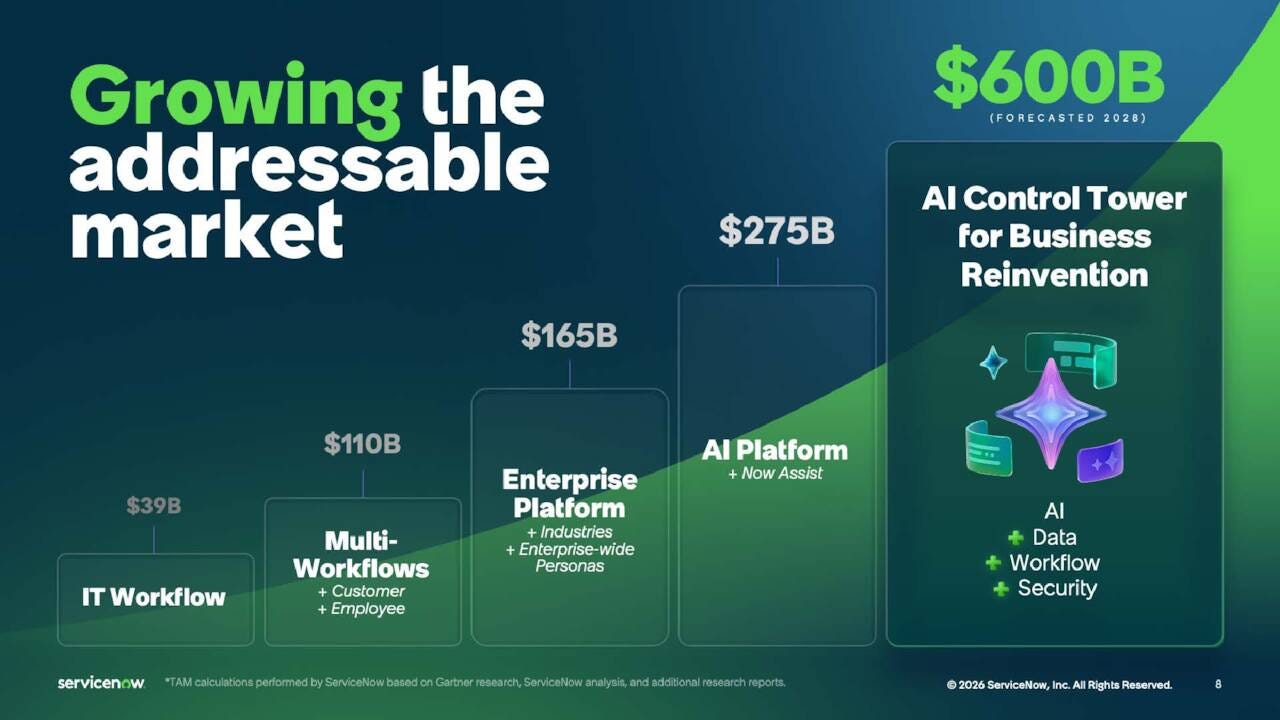
As of December 31, 2025, ServiceNow served approximately 8,700 customers, with a growing emphasis on government and public sector entities.
The company maintains strategic alliances with major technology providers, including AWS, Google, Microsoft, and NVIDIA, as well as global systems integrators like Accenture, Deloitte, and KPMG.
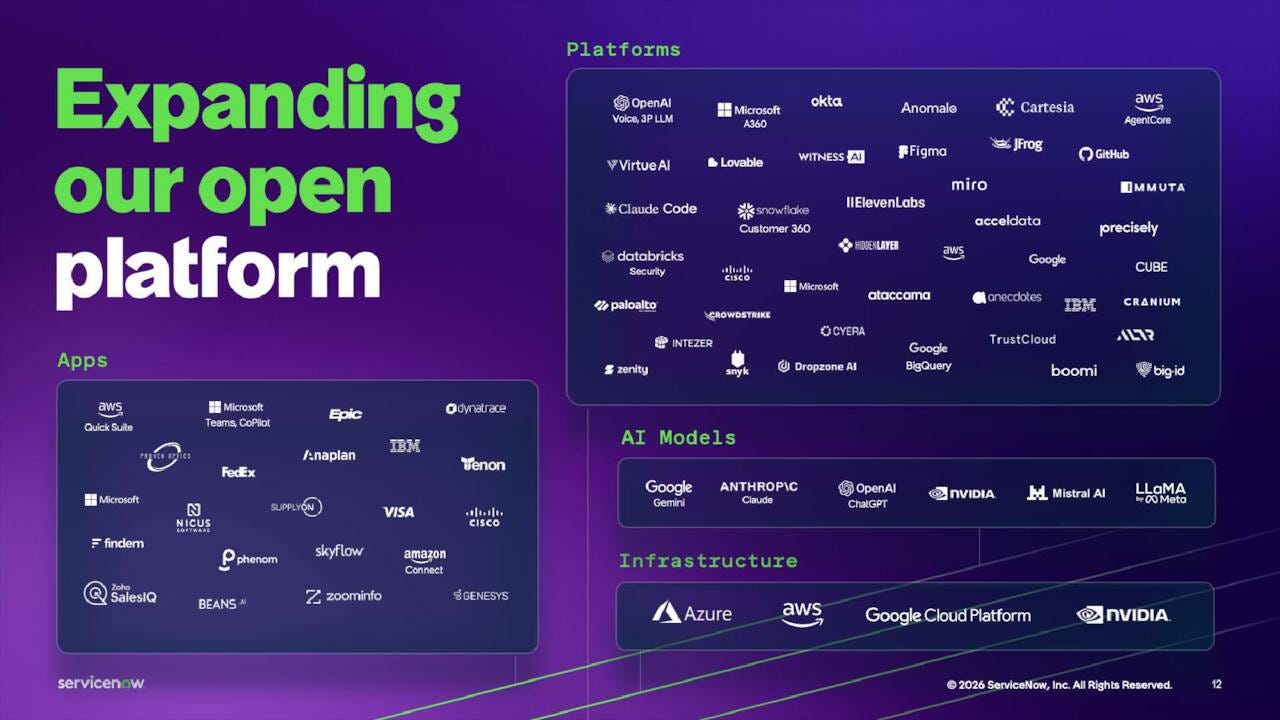
Products are primarily sold through subscription agreements. Some AI and data solutions now include a consumption-based pricing component for usage exceeding fixed service credits.
The company uses its own products to refine features through the “Now on Now” program and co-builds agentic AI solutions with strategic customers via the “Now Next AI” program.
Intellectual Property: ServiceNow holds over 2,000 issued patents globally as of year-end 2025.
Human Capital and Workforce
Workforce Size: The company employs 29,187 full-time employees, split nearly evenly between the U.S. (14,601) and international locations (14,586).
The “People Pact”: This strategy focuses on being People Led, Data Driven, and AI Powered.
ServiceNow University: An AI-powered learning hub launched in 2025 to provide professional development and technical AI skills training to employees, customers, and partners.
Total Rewards: All employees are eligible for annual cash bonuses or sales commissions, alongside a broad-based discretionary equity incentive program.
This week, we’ll look at their AI-based initiatives and tools, and the company’s finances and prospects.