
Remarkable 25

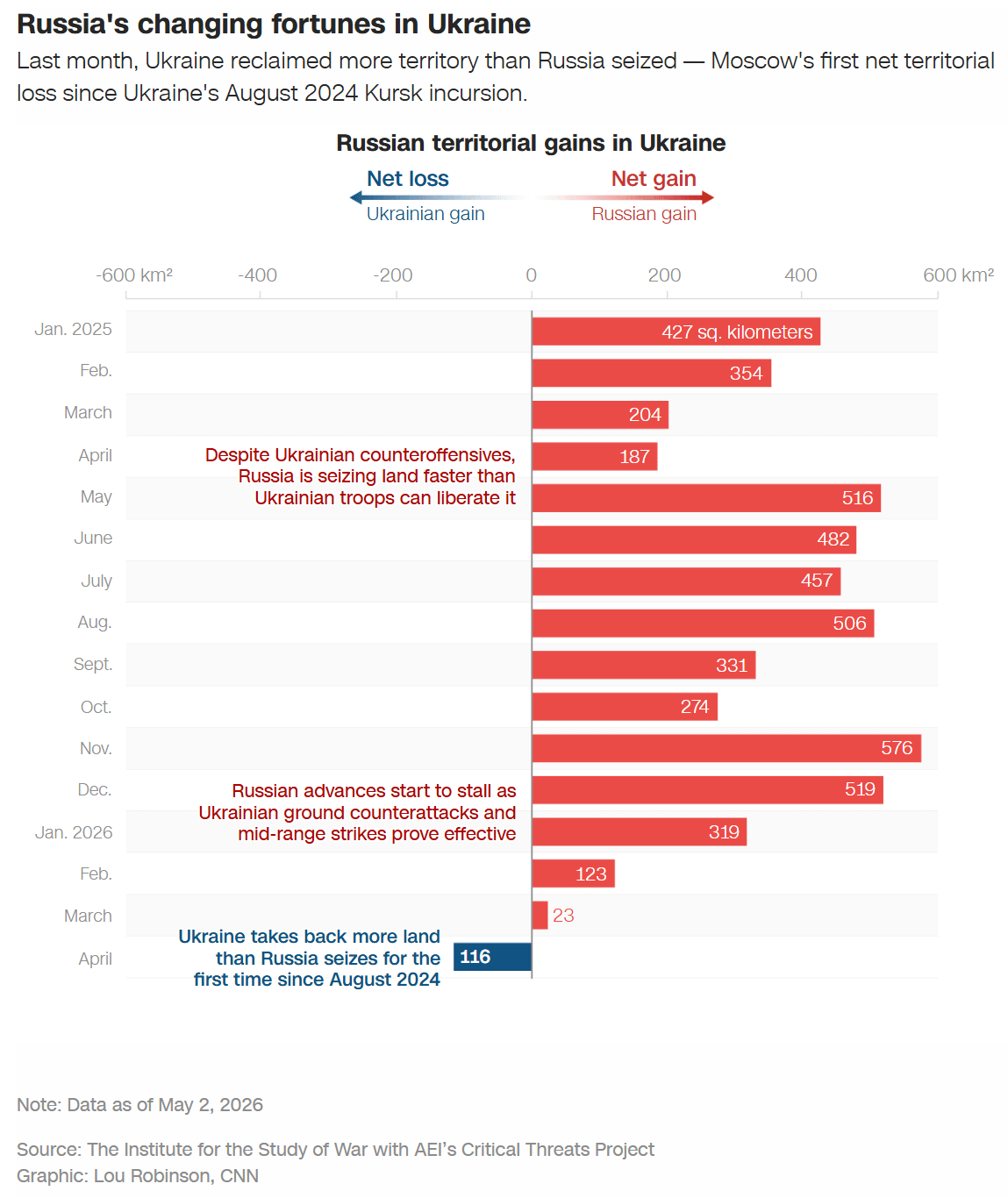
Ukraine has no cards?
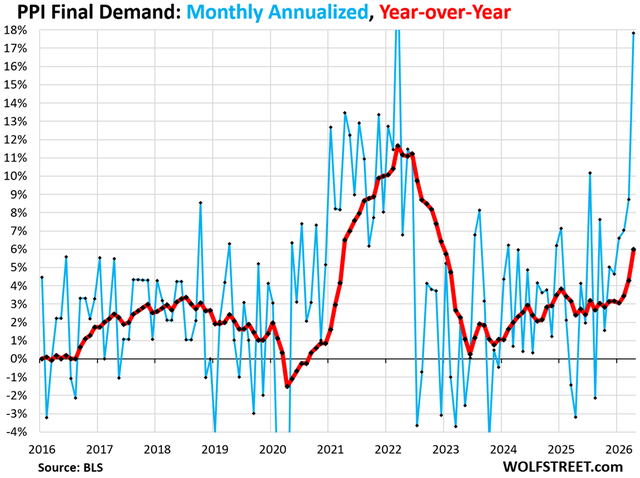
Everyone thinks this market is being driven by AI, but they are wrong. In truth, I’d argue there are three key reasons why stocks keep heading higher. Increased fiscal stimulus, liquidity, and, ironically, the war in Iran have all converged to create very favorable market conditions. While everyone looks at AI, investors are overlooking that QE is back and that new, enhanced SLR legislation is driving up bank lending and re-accelerating the economy. AI is just the outlet of all these underlying tailwinds.
Why Stocks Refuse To Crash (It’s Not AI) (SPX) | Seeking Alpha
The Suunto Core is one of the most unusual smartwatches in the Finnish manufacturer’s range, as the watch achieves a battery life of six to 18 months with a single CR2032 battery, depending on how often the screen backlight is used. An empty battery can simply be replaced. the5krunner has now been able to locate the Suunto Core 2 at the FCC. The certification confirms the smartwatch will receive a number of significant improvements.
AI
Suunto Core 2 smartwatch leaks with potentially multi-year battery life - Notebookcheck News
For the past few years, AI has lived “far away” or at least behind-the-scenes. We ask ChatGPT questions and giant data centers packed with GPUs do the heavy lifting out of sight. But Nvidia, the company powering much of the AI revolution, appears to be betting on something very different for the future: an AI supercomputer inside your home.
At least, that’s the idea gaining traction after viral posts claimed Nvidia wants to turn your house into an AI data center. While the idea might sound a little too sci-fi for most of us to grasp, it’s actually rooted in a very real shift happening across the tech industry. Moving AI out of centralized cloud systems and directly onto personal devices is closer than we think.
We’re launching Claude for Small Business—a package of connectors and ready-to-run workflows that put Claude inside the tools small businesses depend on—to help small business owners take full advantage of AI and cross off items on the to-do list. Small businesses account for 44% of U.S. GDP and employ nearly half the private-sector workforce, but their adoption of AI has lagged behind larger enterprises. Tools and training are rarely tailored to the ways small businesses operate, and as a result their use often stops at the chat window. As part of our public benefit mission, we are committed to helping business owners harness AI more fully and effectively for their most important work.
Introducing Claude for Small Business
Sakana AI’s RL Conductor assigns tasks across GPT-5, Claude Sonnet 4, and Gemini 2.5 Pro dynamically — no hardcoded pipelines, fewer tokens than competing frameworks.
how a 7B model routes tasks across GPT-5, Claude, and Gemini
MIT researchers have a mechanistic explanation for why large language model performance scales so reliably with size. The answer comes down to a phenomenon called superposition. The observation that bigger models perform better is one of the most consistent findings in AI research. Double the parameters, training data, or compute, and a language model’s prediction error drops following a power law. These so-called “Neural Scaling Laws” drive the push to build ever-larger systems. But why they exist in the first place has never been fully explained.
MIT study explains why scaling language models works so reliably
Google is now thrusting Googlebooks out onto the stage. They’re the new generation of AI-first laptops, powered by Android and ChromeOS. And it’s not just upgrades, either. It’s an entirely new philosophy. Instead of waiting for your input, they’re designed to predict your intent and suggest actions before you’ve finished a thought. It is Google’s computer acting on your behalf — not your computer under your control. That makes these Googlebooks something new: the first truly anti-personal personal computers.
Googlebooks are the first anti-personal computers
For some, AI can help remove the drudgery from daily work. These are often people in better-paid, higher-autonomy roles: analysts, consultants, lawyers, academics, managers. In these jobs, provided AI is being rolled out to augment workers rather than replace them, it can feel like a copilot. It can support human judgment, speed up routine tasks and create space for more creative thinking. For many others, though, AI is not an assistant. It is a boss. It appears in scheduling and monitoring tools, route optimisation software and automated performance dashboards – all systems that decide who gets what shift, how long a task should take and whether someone is performing at their maximum capacity. In these workplaces, AI is not something you use. It is something that watches and rules you.
Forget the AI job apocalypse. AI’s real threat is worker control and surveillance
Iran
With the help of the Mossad director, David Barnea, Netanyahu portrayed the Tehran regime as an overripe fruit ready to drop from the branch. “He told Trump: ‘The Iranian economy is in shambles. The people are on the precipice of revolt. The Revolutionary Guards are losing control. Life in Iran is intolerable. This is our time,’” Pinkas said. “‘What we could do together is bring down the regime … think that together, jointly, we can win the war in three, four days.’”
According to multiple reports, US intelligence and military officials stressed the risk that Iran could attack US allies in the Gulf and close the strait of Hormuz. But Netanyahu – and US administration hawks including the defence secretary, Pete Hegseth – prevailed, arguing that Iran’s Revolutionary Guards were overrated and would not have the strength to hit back.
They were proved wrong on every count. The Iranian people did not rise up, the regime did not fall, the Kurds did not attack from the north-west and the Revolutionary Guards were able to inflict withering damage on US bases and Gulf monarchies, close the Hormuz strait and trigger a global economic crisis.
The Trump administration’s public portrayal of a shattered Iranian military is sharply at odds with what U.S. intelligence agencies are telling policymakers behind closed doors, according to classified assessments from early this month that show Iran has regained access to most of its missile sites, launchers and underground facilities. Most alarming to some senior officials is evidence that Iran has restored operational access to 30 of the 33 missile sites it maintains along the Strait of Hormuz, which could threaten American warships and oil tankers transiting the narrow waterw
U.S. Intelligence Shows Iran Retains Substantial Missile Capabilities
The analysis on 15 April predicted that Iran is unlikely to be impacted by the blockade anytime in the near future due to “substantial volumes already on the water”, Kpler’s senior crude analyst Johannes Rauball told The Independent at the time. Tehran also retains 75 per cent of its prewar inventories of mobile launchers and around 70 per cent of its prewar stockpiles of missiles, a US official said. The intelligence runs contrary to president Trump’s statements about the country’s rapidly diminishing weapons cache. “The leadership has gotten more radical, determined and increasingly confident they can outlast US political will and sustain domestic repression to check any resistance,” one official said.
Iran can withstand Trump’s blockade for months and retains 70% of its missiles, says US intelligence
Varia
After embarking on a trial of CAR T-cell therapy, actor Sam Neill announced he is cancer-free. Researchers are enthusiastic the therapies could be a major weapon in the battle against cancer
Researchers have developed a novel fresh produce wash that removes up to 93% of pesticides from the surface and doubles as a preservative, keeping fruit fresher for days longer than normal. What’s more, the wash is mostly made up of biodegradable starch.
New produce wash removes 93% of pesticides and keeps fruit fresh for 15 days
Montessori-Inspired App for Kids 2-8 That Inspires Learning Through Play: Ad-Free, Stress-Free, and Designed for Growing Minds!
Pok Pok: Lifetime Subscription | StackSocial
According to Katherine, he said that one needed only three sets of clothes: “one on one’s body, one in the wash and one in the closet ready to wear.” He always ate the same breakfast — oatmeal, half a grapefruit, black coffee — and lived in the same house for 46 years. “My father simplified his life in terms of his daily habits,” Katherine wrote, “thus eliminating the need to make little decisions about everything.” By taking the small decisions off his plate, that simplification freed his attention for the people and work that actually mattered to him. The mathematician John Allen Paulos illustrated the same principle with a thought experiment, in his 1988 book “Innumeracy”: How should you choose your final romantic partner? First, he argued, you should estimate the number of people you might plausibly date in your lifetime. Then date roughly the first third with no intention of committing. Use that time purely to calibrate what you liked, what you didn’t like and what you might be missing. After that, commit to the very next person you like better than everyone you’ve already dated.
The Nobel-Winning Psychologist Who Believed He Found the Secret to Happiness
A daily pill could keep people slim for life, and help millions ditch other medications, new research suggests. Experts said the drugs could prevent more than 200 diseases linked to obesity – and ultimately be prescribed by GPs to those who were barely overweight. The claims stem from a major trial which found most of the weight lost by patients using GLP-1 injections could be maintained if they switched to far cheaper daily pills. Researchers said such a shift could transform the lives of millions of Britons and lift the burden on health services.
Daily pill could ‘keep you slim for life’
XXX