
Risks Are Increasing Again

Take a few headlines:
Iran says Strait of Hormuz will remain closed until US meets six demands
‘War is inevitable’: Houthis escalate attacks in the Red Sea
And see the potential fallout we have described a couple of months ago. We’re lulled into a false sense of security as oil prices are still behaving. It doesn’t look like we get Hormuz and the Red Sea fully open anytime soon and this remains a ticking time bomb,
The oil market gives a false picture; price increases for derivatives like gasoline, kerosine, diesel, are up significantly more, where supply is limited by the Ukraine war, export bans and capacity constraints in addition to Hormuz problems.
China cut its oil imports by half and Western oil reserves were heavily depleted to make up the shortfall, but this isn’t a solution forever..
But this isn’t the only risk, we have runaway public deficits and debts into a rising rate environment. Japan is the most scary, but surprisingly enough, the US isn’t far behind:
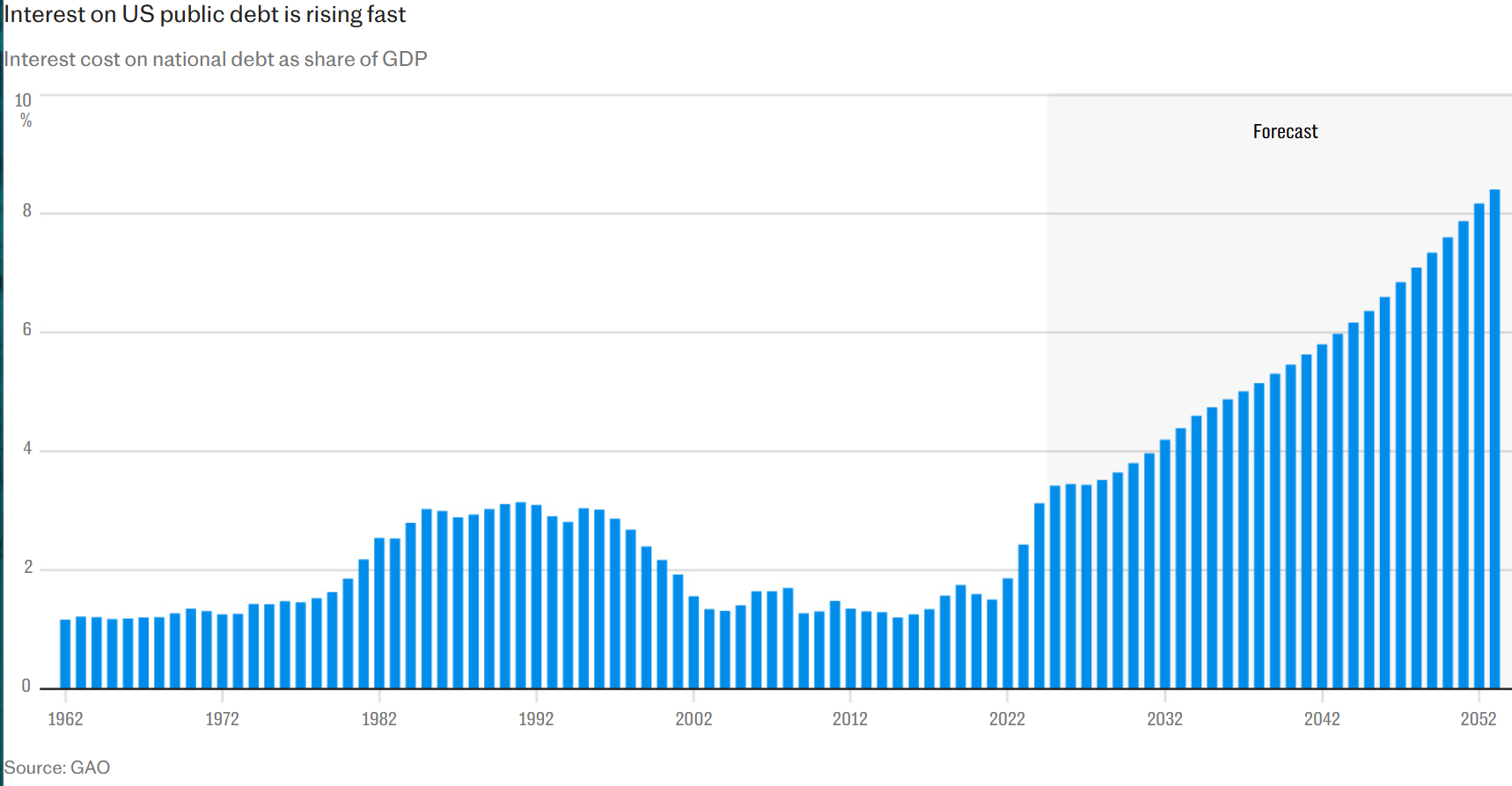
US Fiscal Fragility and the Debt Trap: There is a growing market perception that the US has entered a debt compound trap, where it can no longer raise interest rates to control inflation without triggering a fiscal disaster. The US Treasury is currently forced to roll over $6 trillion of debt every three months while managing a structural deficit that the IMF warns will see gross financing needs reach 45% of GDP this year.
Strategic Desperation in Debt Management: Treasury Secretary Scott Bessent has been accused of “monkeying with debt instruments” by shifting borrowing toward short-term bills to temporarily hide interest costs that now exceed the US defense budget. Desperate measures to stabilize bond yields have included the mobilization of euro holdings without notifying the ECB and utilizing the FIMA Repo Facility to prevent Japan from selling US Treasuries on the open market.
Dangerous Reliance on Leveraged Hedge Funds: The US Treasury market has become acutely dependent on leveraged hedge funds as marginal buyers, with their share of purchases doubling to 9% over the last four years. Many of these funds operate with up to 100 times leverage, creating a volatile market structure that both the IMF and the Bank for International Settlements describe as an “accident waiting to happen”.
Erosion of Federal Reserve Independence: The appointment of Kevin Warsh as Fed Chairman has significantly damaged the central bank’s credibility, as he is widely suspected of doing the president’s bidding. Warsh has faced unprecedented internal dissent from the Fed board after failing to provide a coherent argument for not raising rates despite stubborn inflation that is moving away from the 2% target.
Unsustainable Deficits and Expansionary Spending: The US general government deficit is projected to exceed 7.4% of GDP annually through 2031, driven by compounding debt, entitlements, and aggressive new spending proposals. These include a 60% increase to the Pentagon budget and multi-billion dollar expenditures on a “golden fleet” of battleships, further testing the limits of US financial confidence.
Geopolitical Decline and Potential Triggers: Global faith in US economic management is evaporating as the nation shifts away from upholding free trade and navigates what is perceived as military overstretch. Analysts warn that while the crisis is being temporarily masked by an AI bubble, a definitive “trigger” could occur if the democratic transfer of power is obstructed during the upcoming US mid-term elections.
This isn’t necessarily imminent, but adverse events elsewhere can trigger an escalation, and as the late Rudi Dornbush had it, financial crisis always take longer to arrive but then develop much faster than expected.
The details are in the article below (behind a paywall as the article itself is behind a paywall).
